
Spring Pruning Practices That Promote Strong Trees
Importance of Spring Pruning for Tree Health & Growth
Spring brings new growth and renewed energy to trees and shrubs. It is also the season when proper pruning has the biggest impact on long-term health and appearance. Timely cuts encourage strong structure, improve flowering, and help prevent disease. At Amen Trees, our certified arborists provide spring pruning services in Salt Lake County that protect your landscape and prepare it for a full year of beauty and vigor.
Understanding Spring Pruning
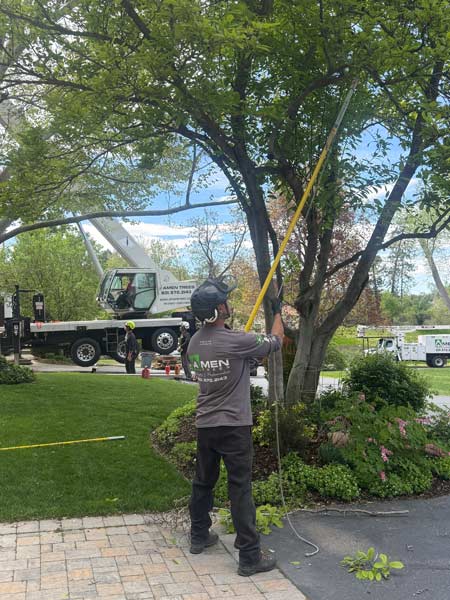
Spring pruning means selectively removing branches, stems, or shoots as the growing season begins. It differs from winter pruning because trees emerging from dormancy and their natural healing processes are active. Done correctly, it directs the tree’s energy into healthy limbs and new buds while increasing air circulation and light penetration. It’s important to prune correctly for the species, age, and condition of each tree to support its natural shape and long-term stability.
Types of Plants That Benefit From Spring Pruning
Can you prune trees in spring? Not all trees and shrubs need the same timing, but many benefit from pruning just as growth resumes. Some of the plants to consider pruning include:
- Flowering Shrubs That Bloom on New Wood – Species such as roses or summer-blooming hydrangeas respond well to spring cuts that stimulate fresh flowering shoots.
- Fruit Trees – Apple, pear, and stone fruit trees gain improved fruit set and airflow when pruned before vigorous growth begins.
- Shade and Ornamental Trees – Maples, oaks, elms, and other ornamentals can be pruned in early spring to remove crossing limbs, deadwood, or winter damage.
- Young Trees – Structural pruning during early years helps establish a strong framework and reduces the need for major corrective pruning later.
Essential Techniques for Effective Spring Pruning
Pruning is both a science and an art. Amen Trees follows industry standards when trimming trees in spring to make precise cuts that protect trees from disease and encourage healthy regrowth:
- Remove Dead or Diseased Wood – Clearing damaged branches prevents pests and fungi from gaining entry and improves airflow.
- Thin for Light and Air – Reducing interior density allows sunlight and air to reach the canopy, supporting photosynthesis and reducing humidity that can lead to disease.
- Shape Without Over-Cutting – Amen Trees focuses on natural form, removing no more than necessary and always cutting back to a branch collar to promote proper healing.
- Maintain Structural Integrity – Identifying weak branch angles and correcting them early reduces the risk of storm damage or breakage.
Common Mistakes to Avoid When Pruning in the Spring
Improper pruning can cause long-term harm. Homeowners attempting DIY pruning often make these errors:
- Topping or Cutting Back Too Far – Severe cuts weaken trees, stimulate weak water sprouts, and create entry points for pests.
- Pruning at the Wrong Time – Some trees and shrubs bloom on old wood and should not be pruned in early spring. Without expert guidance, it is easy to cut off future flowers when trimming bushes in spring.
- Using Dull or Unsanitized Tools – Ragged cuts or contaminated blades invite disease and slow healing.
- Ignoring Tree Health Issues – Removing branches without addressing soil problems, pests, or nutrient deficiencies can leave underlying issues unresolved.
Our Approach to Expert Spring Pruning
Amen Trees take a comprehensive approach to spring pruning. Our method protects both the immediate appearance of your landscape and the long-term health of every tree and shrub. It includes:
- Detailed Evaluation – A certified arborist inspects each tree to identify deadwood, crossing branches, disease, and structural concerns.
- Customized Pruning Plan – Recommendations are based on species, age, location, and homeowner goals, ensuring that each cut supports long-term growth.
- Precise Pruning – Using the right equipment and techniques, arborists remove targeted branches while protecting healthy areas.
- Clean Up and Aftercare – All debris is cleared, and the site is left neat. If additional tree treatments such as soil conditioning are needed, Amen Trees provides a full plan for continued care.
Contact Us for Help Cutting Back Trees in Spring
Spring is the season to give your trees the care they need to flourish. Don’t wait until overgrown branches or hidden disease cause costly damage. Our certified arborists will evaluate your property, create a tailored plan, and ensure every cut strengthens your trees. Contact us now for a free estimate for pruning in the spring and let your landscape thrive.